
- Teacher: Admin User
Seven International University
-
-
-
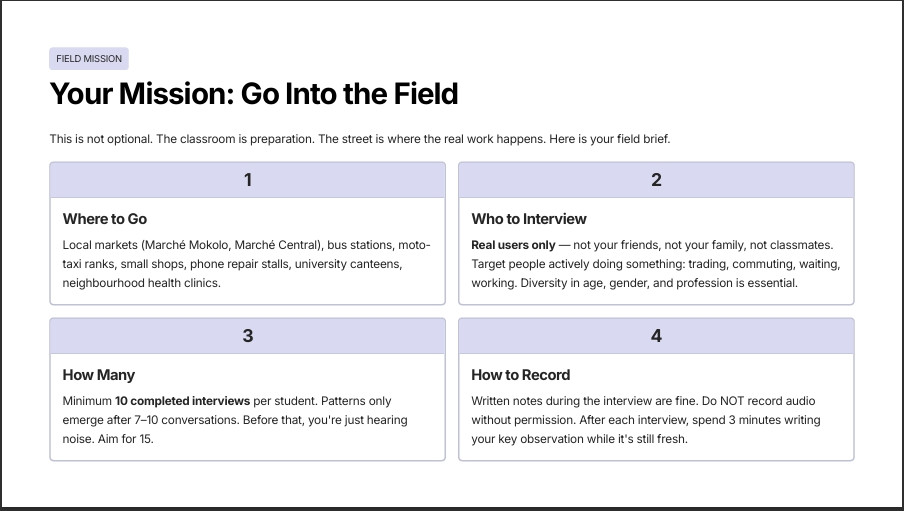
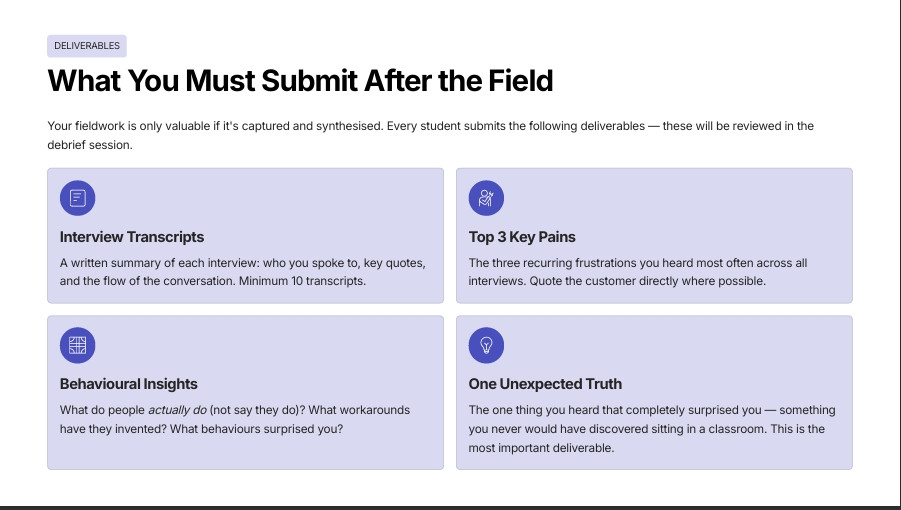
Dear DOERS !
Welcome to this section of the LMS which shall be dedicated to sharing your different experiences getting in touch with potential customers.
Feel free to challenge perspectives and expatiate on the topic.
[!Attention!] You are called to discipline and Commitment in restricting your intervention to the purpose of creation of this blog.HALEU KAME STEPHANE
Available courses
— WELCOME TO CYB 307
Somewhere this trimester, you are going to sit in front of a memory image, a stack of registry hives, or a pile of disagreeing log files, and you are going to have to decide what actually happened — and then convince a skeptical instructor, and eventually a panel, that you're right. That is the entire job of a DFIR investigator, and it's the entire point of this course.
CYB 307 is the investigative core of SIU's cybersecurity programme. Earlier courses teach you to prevent and detect. This one teaches you what to do the moment prevention has already failed: how to preserve fragile evidence before it's gone, piece together what an attacker actually did — sometimes from data they deliberately tried to hide or falsify — and take an organization from 'we've been breached' back to a working, trustworthy state, while producing a record that can survive being read aloud by a board member, a regulator, or a judge.
The One Sentence That Governs This Whole Course
Remember this above everything else
DFIR professionals do not guess. They preserve, analyze, correlate, validate, document, and prove.
Every rubric, every cross-examination question, and every grade you get this trimester traces back to that sentence. A guess that happens to be correct is not what this course rewards. A well-documented, corroborated, honestly-uncertain finding is.
- Teacher: Frederic Tcheuleu
- Teacher: Julius Tagwan
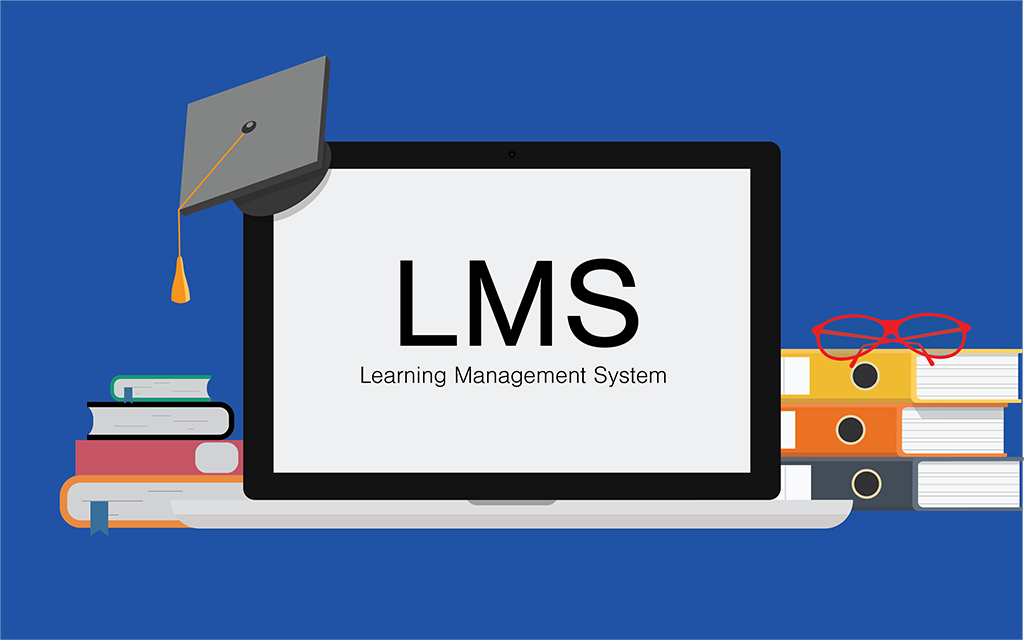
This course provides a comprehensive, hands-on introduction to the Seven University LMS platform (https://lms.seven-university.com/), equipping students and faculty with the skills required to confidently navigate, utilize, and optimize its features.
Participants will learn how to manage their profiles, access course materials, submit assignments, participate in discussions, track academic progress, and communicate effectively within the platform. Beyond basic navigation, the course explores advanced functionalities such as managing course dashboards, interpreting gradebooks, engaging in collaborative tools, handling notifications, and leveraging system features for improved productivity.
Course Learning Objectives (CLOs)
Upon successful completion of this course, learners will be able to:
-
Navigate the LMS dashboard and personalize their user profile settings.
-
Access, download, and organize course materials effectively.
-
Submit assignments, quizzes, and exams through the LMS submission tools.
-
Participate in discussion forums, announcements, and messaging systems.
-
Track grades, feedback, and academic progress using the gradebook features.
-
Manage notifications and calendar events to meet deadlines efficiently.
-
Upload resources and manage course content (for instructors, if applicable).
-
Troubleshoot common technical issues and follow best practices for platform use.
-
Demonstrate responsible digital conduct and academic integrity within the LMS environment.
-
Utilize LMS features to enhance collaboration and communication in academic settings.
Course Modules Overview
Module 1: Introduction to the LMS Platform
-
Overview of the LMS as the central hub for all academic activities.
-
Accessing the LMS through university credentials.
-
Navigating the dashboard, including enrolled courses, announcements, deadlines, and the navigation menu.
Module 2: Profile and Personal Settings
-
Updating profile information and uploading a profile picture.
-
Managing passwords and security verification.
-
Customizing notifications and deadline alerts.
Module 3: Accessing Course Materials
-
Exploring course pages, syllabus, and weekly modules.
-
Accessing lecture slides, reading materials, and multimedia resources.
Module 4: Assignments and Assessments
-
Submitting assignments through the LMS.
-
Completing quizzes and exams within the platform.
-
Accessing gradebook and reviewing instructor feedback.
Module 5: Communication and Collaboration
-
Participating in discussion forums and replying to classmates.
-
Sending and receiving academic messages.
-
Engaging in group activities and collaborative projects.
Module 6: Calendar and Time Management
-
Viewing assignment deadlines and managing the LMS calendar.
-
Synchronizing with personal calendars and setting reminders for assessments.
Module 7: Instructor Tools (Optional Track)
-
Creating course modules and uploading learning materials.
-
Developing assignments and quizzes.
-
Grading submissions, providing feedback, and tracking student analytics.
Module 8: Admin Tools (Optional Track)
-
Introduction to Site Administration.
- Managing users, courses and platform.
Module 9: Troubleshooting and Best Practices
-
Addressing common issues including login, submission, and quiz errors.
-
Applying best practices for academic integrity and effective LMS usage.
- Teacher: Amabo Joshua
- Teacher: MME DOUANLA SIU
In an increasingly interconnected world, cybersecurity is not merely a technical discipline; it's a critical imperative for individuals, businesses, and nations, particularly as Africa embraces digital transformation. This foundational course introduces engineering students to the core concepts, principles, and practices of cybersecurity. Through a hands-on, problem-based approach, students will gain a practical understanding of cyber threats, vulnerabilities, and the fundamental defenses required to protect information systems. We emphasize developing a "security-first" mindset, training proactive individuals ready to identify risks, apply safeguards, and ensure digital resilience.
Course Learning Objectives (CLOs)
Upon successful completion of this course, students will be able to:
-
Articulate foundational cybersecurity concepts, including the CIA Triad (Confidentiality, Integrity, Availability), risk management, and common cyber threats.
-
Identify prevalent vulnerabilities in operating systems, networks, and web applications.
-
Explain the principles of basic network security (e.g., firewalls, IDS/IPS) and secure authentication mechanisms.
-
Demonstrate an understanding of fundamental cryptographic concepts and their application in securing data.
-
Apply basic security configurations to secure a Linux-based operating system.
-
Analyze simple cybersecurity scenarios to recommend appropriate defensive strategies.
-
Discuss ethical considerations, legal frameworks, and the importance of incident response in cybersecurity.
-
Utilize foundational cybersecurity tools in lab environments to explore system vulnerabilities and implement basic protections.
- Teacher: Julius Tagwan
- Teacher: Admin User
Discrete Mathematics is the foundational language of computer science, providing the formal tools necessary for algorithm design, data structures, and cryptographic security. This accelerated course demands discipline and the willpower to translate abstract theory into practical, defensible models.
The core philosophy, aligned with SIU's Project-Based Learning (PBL) model, requires students to achieve mastery in abstract reasoning and immediately apply that knowledge through technical activities and a comprehensive Capstone Project, demonstrating the utility of mathematics in software engineering and cybersecurity.
Learning Objectives (CLOs)
Upon successful completion of this course, students will be able to:
-
Logical Proof: Construct valid formal mathematical arguments and master proof techniques (direct, induction, contradiction).
-
Modeling: Utilize set theory, relations, and functions to accurately model fundamental computational structures and data organization principles.
-
Complexity Analysis: Apply combinatorial principles and Big-O notation to analyze the worst-case efficiency of algorithms.
-
Graph Applications: Employ graph theory to model and solve practical problems in network topology, routing, and optimization (e.g., shortest path).
-
Application/PBL: Design, analyze, and present a complete, mathematically-grounded solution in the Capstone Project, proving the effectiveness of a chosen discrete math concept in a computing scenario.
- Teacher: DR NDAMBOMVE SIU
- Teacher: MME DOUANLA SIU
- Teacher: Admin User
Calculus is the mathematical language of change, motion, and optimization – concepts fundamental to Software Engineering, Cybersecurity & Network Engineering, and Business Management & Startup Building. This course provides engineering students with a robust introduction to differential and integral calculus. Beyond theoretical understanding, the emphasis will be on developing analytical thinking, problem-solving strategies, and the practical application of calculus to model and solve problems encountered in various engineering and computational domains. Students will cultivate precision and logical rigor, essential traits for any innovator at SIU.
Course Learning Objectives (CLOs)
Upon successful completion of this course, students will be able to:
-
Define and interpret the concept of limits, continuity, and differentiability for functions.
-
Compute derivatives of various functions using fundamental rules (power, product, quotient, chain rule) and implicit differentiation.
-
Apply differentiation techniques to solve real-world problems involving rates of change, optimization, and curve sketching.
-
Understand and apply the Mean Value Theorem and L'Hôpital's Rule for indeterminate forms.
-
Define and compute indefinite and definite integrals using techniques like substitution.
-
State and apply the Fundamental Theorem of Calculus to evaluate definite integrals and solve basic accumulation problems.
-
Utilize calculus concepts to model and solve practical problems in physics, engineering, and economics, demonstrating a "doer's" approach to mathematical challenges.
Communicate mathematical solutions clearly and precisely using appropriate notation and terminology.
- Teacher: DR NDAMBOMVE SIU
- Teacher: Admin User
- Teacher: DR NDAMBOMVE SIU
Effective communication is the cornerstone of success in any engineering or entrepreneurial venture. This course is specifically tailored for SIU's "doers," focusing on developing clear, concise, and professional English communication skills essential for the business and technology sectors. Students will master written and verbal communication strategies, enabling them to articulate complex technical ideas, collaborate in teams, and engage with stakeholders effectively. Through a highly practical approach, including workshops, assignments, and presentations, students will build the discipline needed for precise expression, the willpower to communicate with impact, and the fulfillment of confidently navigating professional interactions.
Course Learning Objectives (CLOs)
Upon successful completion of this course, students will be able to:
-
Produce clear, concise, and grammatically correct written communications (emails, memos, short reports) appropriate for business and technological contexts.
-
Apply foundational technical writing principles to describe processes, define terms, and provide instructions accurately.
-
Develop and deliver effective oral presentations, demonstrating clarity, organization, and confidence.
-
Utilize appropriate professional vocabulary and terminology relevant to the technology and business sectors.
-
Construct professional resumes and compelling cover letters for internships and entry-level positions.
-
Participate actively and professionally in group discussions and collaborative communication tasks.
-
Edit and revise their own and others' written work for clarity, coherence, and grammatical accuracy.
-
Understand the importance of ethical communication in professional and technical environments.
- Teacher: MME DOUANLA SIU
- Teacher: Admin User
Linux is the backbone of the internet, cloud computing, servers, and embedded systems—an indispensable tool for both Software Engineering and Cybersecurity & Networking. This course provides SIU's engineering students with a deep, hands-on immersion into the Linux operating system. Moving beyond a user-level understanding, students will master the command-line interface (CLI), comprehend the Linux file system, manage users and processes, and delve into basic shell scripting. Through extensive practical labs and problem-based scenarios, students will develop the essential technical proficiency to navigate, configure, and secure Linux environments. This course is about transforming students into "doers" who are not just users, but confident administrators and powerful developers within the Linux ecosystem.
Learning Objectives (CLOs)
Upon successful completion of this course, students will be able to:
-
Install and configure a Linux operating system (e.g., Ubuntu, Fedora) in a virtualized environment.
-
Navigate and manage the Linux file system effectively using fundamental command-line utilities.
-
Control file and directory permissions to ensure system security and data integrity.
-
Perform user and group management, understanding their roles in a multi-user environment.
-
Monitor and manage system processes and services.
-
Utilize basic networking commands to diagnose and troubleshoot connectivity issues.
-
Write and execute simple shell scripts for task automation.
-
Apply best practices for package management, system updates, and basic system security hardening.
- Teacher: MR WANSI MATHURIN SIU
- Teacher: Admin User
This foundational course introduces students to the core principles of computer science and the art of programming, using Python as the primary language. Recognizing that modern engineering disciplines are deeply intertwined with computational thinking, this course goes beyond syntax to cultivate algorithmic problem-solving, logical reasoning, and the practical skills of software development. Through a rigorous Project-Based Learning (PBL) approach, students will actively build and debug solutions to engineering-relevant challenges, solidifying their role as proactive "doers" ready to contribute to Africa's technological advancement.
-
Articulate fundamental computer science concepts, including data representation, computational models, and the software development lifecycle.
-
Apply structured algorithmic thinking to break down and solve complex engineering problems programmatically.
-
Implement core programming constructs (variables, data types, operators, control flow, functions) in Python to develop functional solutions.
-
Utilize essential data structures (lists, tuples, dictionaries, sets) for efficient data management and manipulation.
-
Design and develop simple object-oriented programs, demonstrating an understanding of classes, objects, inheritance, and polymorphism.
-
Write, debug, and test Python programs systematically to ensure correctness and robustness.
-
Collaborate effectively on programming projects, leveraging basic version control principles and teamwork.
-
Demonstrate the ability to translate real-world engineering challenges into computational solutions, embodying the "doer" mindset.
- Teacher: M. TCHOKOTE SIU
- Teacher: Admin User
- Teacher: Amabo Joshua
- Teacher: MR HONORÉ SIU
In today's rapidly evolving global economy, particularly within Africa's burgeoning tech landscape, Information Technology (IT) is not merely a support function; it is a strategic asset and a catalyst for innovation and competitive advantage. This course provides SIU students with a comprehensive understanding of how IT systems, applications, and infrastructure drive business operations, decision-making, and digital transformation. We will explore the fundamental concepts of IT management, from enterprise systems and data analytics to cloud computing and cybersecurity, all viewed through the lens of business value creation. Through practical case studies, real-world examples, and project-based assignments, students will develop the analytical skills to identify business problems and propose technological solutions, cultivating the mindset of a "doer" who can bridge the gap between technology and strategic business outcomes
Learning Objectives (CLOs)
Upon successful completion of this course, students will be able to:
-
Explain the strategic role of Information Technology in achieving business objectives and enabling digital transformation, especially within the African context.
-
Identify and describe various IT infrastructure components (hardware, software, networks) and their impact on business operations.
-
Analyze the functionality and strategic importance of enterprise systems (ERP, CRM, SCM) in managing business processes.
-
Apply foundational data management concepts, including database principles and the role of business intelligence in decision-making.
-
Evaluate the benefits and challenges of cloud computing for business, including different service models (IaaS, PaaS, SaaS).
-
Understand the critical importance of cybersecurity for business continuity and data protection.
-
Assess the impact of emerging technologies (e.g., AI, IoT, Blockchain) on business models and competitive strategies.
- Teacher: DR ABUNDE SIU
- Teacher: Frederic TCHEULEU
- Teacher: Admin User

Learn Mathematic basic for computer science
- Teacher: Admin User
Database Engineers.
For the next 12 weeks, we’ll operate like a real digital transformation unit.
Your job is to design the brain of SIU – the system that makes student data, grades, programs, and payments flow seamlessly.
- Teacher: MR WANSI MATHURIN SIU
- Teacher: MRS WANDI SIU
- Teacher: Admin User
- Teacher: M. TCHOKOTE SIU
- Teacher: Admin User

In the collaborative world of modern engineering and software development, effective Version Control Systems (VCS) are indispensable. This course introduces engineering students to the principles and practical applications of Git, the industry-standard distributed version control system. Students will move beyond basic commands to master collaborative workflows, manage project histories, resolve conflicts, and integrate VCS into their daily development practices. Through extensive hands-on labs and project work, students will not only learn how to use Git but why it is crucial for team efficiency, code integrity, and continuous delivery, transforming them into disciplined and effective "doers."
Course Learning Objectives (CLOs)
Upon successful completion of this course, students will be able to:
-
Explain the core concepts of version control, including distributed vs. centralized systems, commits, branches, and merges.
-
Install and configure Git on their local development environments.
-
Perform fundamental Git operations (initialize repositories, stage changes, commit, view history).
-
Implement branching and merging strategies for managing independent lines of development.
-
Interact with remote repositories (e.g., GitHub, GitLab) to push, pull, clone, and fetch changes.
-
Resolve common merge conflicts efficiently and effectively.
-
Utilize advanced Git features (stashing, rebasing, reverting, resetting) for flexible workflow management.
-
Collaborate effectively with team members on shared codebases, adhering to best practices for Git workflows.
Integrate Git with various Integrated Development Environments (IDEs) and other development tools.
- Teacher: MR HONORÉ SIU
- Teacher: MR WANSI MATHURIN SIU
- Teacher: Admin User
- Teacher: Amabo Joshua
- Teacher: DR ABUNDE SIU
- Teacher: MRS TCHEULEU ASSISTÉ PAR MR TANTO SIU
This course is the gateway for SIU students into the dynamic world of entrepreneurship. It is specifically tailored to cultivate the mindset of "doers" who identify problems, validate solutions, and lay the groundwork for scalable ventures that address pressing African and global challenges. Moving beyond theoretical business concepts, this course adopts a rigorous Project-Based Learning (PBL) approach. Students will actively engage in identifying opportunities, understanding customer needs, and developing a foundational business model for a new startup idea. This practical immersion fosters the willpower to innovate, the discipline of systematic validation, and the fulfillment of initiating a venture poised to make real impact.
Learning Objectives (CLOs)
Upon successful completion of this course, students will be able to:
-
Cultivate an entrepreneurial mindset, recognizing opportunities and challenges within the African technological and business landscape.
-
Identify and articulate compelling problems that can be addressed by innovative startup solutions.
-
Conduct foundational market research to understand target customer segments and competitive landscapes.
-
Develop a clear and compelling Value Proposition that differentiates a product or service.
-
Utilize frameworks like the Lean Canvas to articulate and visualize a preliminary business model.
-
Apply basic principles of the Lean Startup methodology, focusing on rapid iteration and customer validation.
-
Communicate effectively about their startup ideas, problems, solutions, and business models through concise written and verbal presentations.
-
Collaborate effectively in a team environment to develop and refine startup concepts.
- Teacher: DR ABUNDE SIU
- Teacher: MRS WANDI SIU
- Teacher: Frederic TCHEULEU
- Teacher: Admin User
Course Overview & Philosophy
In a world overflowing with data, the ability to collect, analyze, and interpret information to make strategic decisions is a critical skill for any entrepreneur, engineer, or business leader. This course provides SIU's "doers" with a practical, hands-on framework for understanding and applying the principles of market research and experimental design. We will move beyond abstract concepts to focus on real-world application, equipping students to identify market opportunities, validate product ideas, and measure the effectiveness of their initiatives. Through a series of team-based projects and a final experimental design challenge, students will cultivate the willpower to seek the truth through data, the discipline to follow rigorous scientific methods, and the fulfillment of building solutions that are not just clever, but are proven to meet real market needs.
Learning Objectives (CLOs)
Upon successful completion of this course, students will be able to:
-
Formulate a clear research question and identify the appropriate research methodology to answer it.
-
Differentiate between primary and secondary research and identify their respective strengths and limitations.
-
Design and execute a qualitative research project (e.g., in-depth interviews, focus groups) to gather rich insights.
-
Design and implement a quantitative research project (e.g., surveys, A/B testing) to collect and analyze numerical data.
-
Apply foundational statistical concepts for data analysis, including descriptive and inferential statistics.
-
Construct and present a professional market research report with clear findings, conclusions, and actionable recommendations.
-
Understand and apply the principles of experimental design to test hypotheses and establish cause-and-effect relationships.
8. Utilize modern tools for data collection (e.g., Google Forms, SurveyMonkey), analysis (e.g., Excel, Google Sheets), and presentation.
- Teacher: MRS SIMO SIU
- Teacher: Admin User
Course Overview & Philosophy
Whether you are an entrepreneur pitching to an investor, a software engineer negotiating a salary, or a business leader securing a partnership, the ability to sell an idea and negotiate a favorable outcome is a core competency for success. This course provides SIU’s students with a practical, hands-on framework for mastering the human-centric skills of sales and negotiation. We will move beyond common misconceptions to focus on a strategic, ethical, and collaborative approach. Through a series of role-playing simulations, case studies, and a final, high-stakes negotiation project, students will cultivate the willpower to overcome objections, the discipline to prepare for any encounter, and the fulfillment of building valuable, lasting relationships. This course is about transforming students into "doers" who can not only build great things but can also get others to believe in them.
Learning Objectives (CLOs)
Upon successful completion of this course, students will be able to:
-
Formulate and articulate a compelling value proposition for a product or service.
-
Master the stages of the sales process, from prospecting and discovery to closing and follow-up.
-
Identify and practice persuasive communication and active listening to build rapport and trust.
-
Develop and execute a robust negotiation strategy, understanding the importance of leverage and alternatives.
-
Effectively manage and respond to common objections and difficult questions.
-
Apply foundational negotiation principles, including concepts like BATNA (Best Alternative To a Negotiated Agreement).
-
Conduct a realistic and professional sales pitch or negotiation, integrating skills from across the course.
-
Analyze and reflect on their own performance in sales and negotiation scenarios to identify areas for growth.
- Teacher: Yembe Nfor
- Teacher: Merimee Wilson Ngounou
- Teacher: MRS SIMO SIU
- Teacher: MRS WANDI SIU
- Teacher: Frederic TCHEULEU
- Teacher: Admin User
This course transforms students from marketing theorists into strategic Digital Doers. It provides a comprehensive, hands-on journey through the modern digital marketing landscape, emphasizing the data-driven execution required for rapid commercial success. Students will learn to design, implement, and measure integrated digital campaigns across search, social, and proprietary channels. We focus on practical application, utilizing industry-standard tools and adhering to the Discipline of continuous optimization. The ultimate goal is to cultivate the Willpower to manage marketing budgets effectively and achieve measurable Fulfillment (ROI) for any tech product or service.
Learning Objectives
-
Develop a Holistic Strategy: Map the customer journey and design an integrated digital marketing strategy that aligns with business objectives (e.g., Acquisition, Activation, Revenue).
-
Master Digital Analytics: Accurately set up, track, and interpret performance data using platforms like Google Analytics, translating raw data into actionable insights and strategic decisions.
-
Execute Paid Campaigns: Launch and optimize paid advertising campaigns (PPC and Social Media Ads) while managing budget constraints and maximizing Return on Investment (ROI).
-
Drive Organic Growth: Implement effective Search Engine Optimization (SEO) and content strategies to increase organic visibility and authority.
-
Apply Conversion Rate Optimization (CRO): Utilize A/B testing and user experience (UX) principles to improve landing page performance and maximize conversion rates across the funnel.
- Teacher: MME GUEGANG SIU
- Teacher: MME NJOLLE SIU
- Teacher: Admin User
This course is dedicated to producing practical innovators. It immerses students in the methodology of Growth Hacking—a rigorous, data-driven, and experimentation-focused approach to rapidly scaling startups and tech products. The goal is not to teach static marketing tactics, but to instill a scientific, growth-minded discipline. Students will learn to leverage data, automation, and cross-functional skills (psychology, light coding, analytics) to identify high-impact growth levers across the entire AARRR (Acquisition, Activation, Retention, Referral, Revenue) funnel. Through an intense Capstone Experimentation Project, students will apply the Discipline of rapid iteration to become competent "Doers" capable of driving measurable, sustainable growth for any technology venture.
Learning Objectives (CLOs)
Upon successful completion of this course, students will be able to:
-
Master the Methodology: Apply the complete Growth Hacking cycle (Ideation → Prioritization → Test → Analyze) using frameworks like ICE or PIE.
-
Establish Measurement: Define and track actionable North Star Metrics (NSMs) and Key Performance Indicators (KPIs) for every stage of the AARRR funnel.
-
Hack Activation and Retention: Design Onboarding strategies that maximize Activation and use feedback loops and gamification tactics to increase Retention.
-
Technically Experiment: Utilize automation tools and basic coding skills to rapidly execute A/B Testing and personalization experiments without heavy reliance on engineering teams.
-
Adopt a Growth Ethic: Develop ethical and compliant growth experiments (including Cybersecurity and data privacy considerations), ensuring healthy, long-term growth.
- Teacher: Admin User
Effective management is the backbone of any successful organization, whether it's a tech startup, a large corporation, or a cybersecurity team. This course provides SIU's students with a comprehensive understanding of the foundational theories and evolving concepts that underpin modern management. We will explore how various management perspectives have shaped organizational practices, focusing on their practical application in today's dynamic business and technological environments. Through case studies, simulations, and project-based learning, students will develop the analytical skills to diagnose organizational challenges, apply appropriate managerial frameworks, and cultivate the leadership mindset of a "doer" prepared to steer projects and teams towards success within the African context and beyond.
Learning Objectives (CLOs)
Upon successful completion of this course, students will be able to:
-
Trace the historical evolution of management thought, from classical to contemporary approaches, and understand their relevance.
-
Analyze the primary functions of management: planning, organizing, leading, and controlling.
-
Differentiate various organizational structures and their suitability for different types of businesses and projects, especially tech startups.
-
Evaluate different leadership styles and motivational theories for effectiveness in diverse team settings.
-
Apply core management theories to diagnose and propose solutions for real-world business challenges.
-
Develop critical thinking and problem-solving skills to anticipate and respond to organizational changes.
-
Communicate managerial concepts and strategic recommendations clearly and persuasively, both orally and in writing.
-
Collaborate effectively in teams to analyze management scenarios and develop collective solutions.
- Teacher: Yembe Nfor
- Teacher: Frederic TCHEULEU
- Teacher: Admin User
Effective management is the backbone of any successful organization, whether it's a tech startup, a large corporation, or a cybersecurity team. This course provides SIU's students with a comprehensive understanding of the foundational theories and evolving concepts that underpin modern management. We will explore how various management perspectives have shaped organizational practices, focusing on their practical application in today's dynamic business and technological environments. Through case studies, simulations, and project-based learning, students will develop the analytical skills to diagnose organizational challenges, apply appropriate managerial frameworks, and cultivate the leadership mindset of a "doer" prepared to steer projects and teams towards success within the African context and beyond.
Learning Objectives (CLOs)
Upon successful completion of this course, students will be able to:
-
Trace the historical evolution of management thought, from classical to contemporary approaches, and understand their relevance.
-
Analyze the primary functions of management: planning, organizing, leading, and controlling.
-
Differentiate various organizational structures and their suitability for different types of businesses and projects, especially tech startups.
-
Evaluate different leadership styles and motivational theories for effectiveness in diverse team settings.
-
Apply core management theories to diagnose and propose solutions for real-world business challenges.
-
Develop critical thinking and problem-solving skills to anticipate and respond to organizational changes.
-
Communicate managerial concepts and strategic recommendations clearly and persuasively, both orally and in writing.
-
Collaborate effectively in teams to analyze management scenarios and develop collective solutions.
- Teacher: Yembe Nfor
- Teacher: Admin User
- Teacher: Amabo Joshua
- Teacher: MME DOUANLA SIU
- Teacher: MRS TCHEULEU ASSISTÉ PAR MR TANTO SIU
- Teacher: MRS WANDI SIU
Course Title: Structure of Emerging Economies and Startup Potential
Course Code: BUS 113
Trimester: Trimester 2 (Jan 5, 2026 – March 20, 2026)
Contact Hours: 4 hours/week (total 36 hours of instruction over 9 weeks)
1. Course Overview & Philosophy
While developed markets focus on incremental innovation, emerging economies offer the "Technological Vanguard" the chance to build foundational infrastructure. BUS 113 explores the unique structural characteristics, institutional gaps, and leapfrogging opportunities present in developing markets. This course is designed for students who want to understand the "why" behind the success of giants like M-Pesa, Flutterwave, and Grab.
At SIU, we don't view emerging markets through the lens of scarcity, but through the lens of startup potential. We emphasize the discipline required to navigate complex regulatory environments, the willpower to build in high-uncertainty contexts, and the fulfillment of solving problems that impact millions. This course provides the macroeconomic context necessary to turn local challenges into scalable global ventures.
2. Course Learning Objectives (CLOs)
Upon successful completion of this course, students will be able to:
-
Analyze the structural differences between developed and emerging economies (e.g., informal sectors, infrastructure gaps).
-
Identify "Institutional Voids" and transform them into viable business opportunities for startups.
-
Evaluate the concept of "Technological Leapfrogging" and its application in fintech, energy, and agritech.
-
Assess the impact of currency volatility, inflation, and political risk on startup operations and valuation.
-
Map the startup ecosystems of key emerging hubs (Lagos, Nairobi, Cairo, Jakarta, São Paulo).
-
Formulate localized business models that account for low-trust environments and fragmented supply chains.
-
Adhere to the SIU standards of Discipline by maintaining high ethical standards in markets where governance may be weak.
3. Pedagogical Approach & Active Learning
This course will employ an active learning approach to foster deep understanding and practical application.
-
The "Void" Hunter Lab: Weekly exercises where students identify a specific failure in local infrastructure (e.g., waste management or identity verification) and draft a startup solution.
-
Macro-Stress Simulations: Real-time drills where students must adjust their startup's financial and operational strategy in response to a simulated currency devaluation or regulatory shift.
-
Ecosystem Deep-Dives: Comparative analysis of successful African unicorns vs. their counterparts in other emerging markets.
-
The Localization Challenge: Taking a successful Western business model (e.g., Amazon or Uber) and completely re-architecting it to survive the structural constraints of an emerging economy.
4. Grading & Assessment Breakdown
Assessment will be rigorous, reflecting the importance of discipline in mathematical precision and problem-solving, and contributing to overall fulfillment in mastering foundational knowledge.
-
Punctuality & Participation: 10% (Attendance and active engagement in debates regarding emerging market policy and startup case studies.)
-
Assignments, Labs & Projects: 20% (Includes weekly "Void" reports, ecosystem mapping presentations, and the "Market Entry" project.)
-
Mid-Term Exam: 30% (Covers macroeconomic fundamentals, institutional theory, and leapfrogging concepts.)
-
Final Exam: 40% (Comprehensive exam focusing on risk management, localized business modeling, and a final "Market Potential" thesis.)
Grading Scale:
-
A+: 95-100%
-
A: 90-94%
-
A-: 85-89%
-
B+: 80-84%
-
B: 75-79%
-
B-: 70-74%
-
C+: 65-69%
-
C: 60-64%
-
F: Below 60%
5. Course Schedule & Topics (9 Weeks of Instruction)
Each 4-hour class session will include theoretical exposition, worked examples, and significant time for student practice and Q&A.
Week 1 (Jan 5-9): Defining the Emerging Market Context
-
Topics: Characteristics of emerging vs. frontier markets; The role of the informal economy; Demographic dividends.
-
Activities: Analyzing the "Informal GDP" of local markets and its implications for digital payment adoption.
-
Project Focus: The Market Profile – Selecting an emerging economy and mapping its core economic indicators.
Week 2 (Jan 12-16): Institutional Voids as Opportunity
-
Topics: What are Institutional Voids? (Lack of specialized intermediaries, weak contract enforcement); Turning gaps into markets.
-
Activities: Identifying the "middlemen" missing in local supply chains.
-
Project Focus: The Void Report – Identifying one specific institutional failure and a tech-driven solution.
Week 3 (Jan 19-23): Technological Leapfrogging
-
Topics: Skipping the desktop for mobile; Skipping the grid for solar; Mobile money vs. traditional banking.
-
Activities: Case study: How M-Pesa skipped the credit card era in East Africa.
-
Project Focus: Leapfrog Strategy – Proposing a technology that allows a sector to bypass traditional infrastructure.
Week 4 (Jan 26-30): Logistics, Infrastructure & The "Last Mile"
-
Topics: Fragmented supply chains; Cold chain challenges; The cost of moving physical goods in emerging hubs.
-
Activities: Mapping the journey of a physical product from a port to a rural customer.
-
Project Focus: The Last Mile Plan – Designing a logistics strategy for an e-commerce startup in a low-infrastructure zone.
Week 5 (Feb 2-6): Macro-Risks: Currency, Inflation & Regulation
-
Topics: Managing FX risk; Hyperinflation survival for startups; Navigating "gray" regulatory areas.
-
Activities: Simulation: Re-pricing a software subscription service during a 20% currency slide.
-
Project Focus: Risk Mitigation Framework – Creating a financial safety net for a startup operating in a volatile currency environment.
Week 6 (Feb 9-13): MID-TERM EXAMINATIONS
-
Activities: No regular classes. Assessment covering weeks 1 through 5.
Week 7 (Feb 16-20): Trust, Identity & Social Capital
-
Topics: Building trust in low-trust societies; Social commerce; Community-based business models.
-
Activities: Analyzing how "referral" and "community" drive growth for startups like Pinduoduo or Copia.
-
Project Focus: The Trust Protocol – Building a feature that creates verifiable trust between strangers in a marketplace.
Week 8 (Feb 23-27): Comparative Ecosystems: Africa vs. The World
-
Topics: The "Big Four" in Africa (Nigeria, Kenya, Egypt, SA) vs. SE Asia (Vietnam, Indonesia).
-
Activities: Group debate: Which emerging region offers the best ROI for a fintech startup in 2026?
-
Project Focus: Ecosystem Analysis – A comparative report on how different governments support startup growth.
Week 9 (Mar 2-6): Localizing for Scale
-
Topics: Regional trade blocs (AfCFTA); Language barriers; Cross-border expansion in emerging markets.
-
Activities: Designing a market entry strategy for a Nigerian startup moving into the Francophone market.
-
Project Focus: The Expansion Roadmap – A strategic plan for taking a local solution to three other emerging markets.
Week 10 (Mar 9-13): Final Synthesis & Review
-
Activities: Presentation of the "Market Potential" thesis; Final review of risk management and structural theory.
Week 11 (Mar 16-20): FINAL EXAMINATIONS
-
Activities: Comprehensive examination.
6. Required Resources
-
Textbook: Winning in Emerging Markets by Tarun Khanna and Krishna Palepu.
-
Reading: Selected reports from Partech Africa, Briter Bridges, and the World Bank.
-
Online Resources: SIU LMS for startup case studies and real-time economic data trackers.
7. Academic Integrity & Professionalism
All students are expected to uphold SIU's Academic Integrity Policy. Professionalism in this course involves a deep respect for the complexities of different cultures and economies. Students are expected to approach the study of emerging markets with the discipline of a researcher and the willpower of a founder, avoiding stereotypes and focusing on data-driven potential.
- Teacher: MR FONGANG SIU
- Teacher: Admin User
This course trains students in the fundamentals of team formation, leadership, communication, conflict management, and cross-cultural collaboration through hands-on projects. By the end of the semester, students should understand how strong teams drive startup success and how weak teams contribute to failure.
- Teacher: Yembe Nfor
- Teacher: MRS SIMO SIU
- Teacher: MRS WANDI SIU
- Teacher: Admin User
- Teacher: MRS WANDI SIU
- Teacher: Frederic TCHEULEU
📚 Course Overview
This course empowers students to launch and scale startups that solve public challenges — in areas such as healthcare, education, transport, justice, urban management, taxation, agriculture, digital identity, and more. Students will explore the intersection of entrepreneurship, policy, and technology, using lean startup principles tailored for public value creation.
🧠 Learning Objectives
By the end of the course, students will be able to:
-
Understand how governments and public institutions operate and how startups can serve or disrupt them.
-
Identify high-impact public sector problems that are solvable by startup solutions.
-
Develop Public Impact Startups (PIS) using lean startup methodology.
-
Navigate regulations, procurement processes, and stakeholder mapping in the public sphere.
-
Design and test low-cost prototypes to solve real public issues.
-
Pitch evidence-based, scalable solutions to public or NGO partners.
🧩 Core Modules
-
Public Sector 101 for Entrepreneurs
-
Structure and pain points of government institutions
-
Challenges in African governance and public service delivery
-
How startups can plug into government systems
-
-
Civic-Tech & GovTech Innovation
-
Global and African case studies (e.g. Estonia e-Gov, mPedigree, FixMyStreet, Ushahidi)
-
Open data, participatory governance, and digital democracy
-
-
From Problem to Prototype
-
User discovery in the public sector
-
Inclusive design for underserved populations
-
Building MVPs with public constraints
-
-
Public Procurement & Policy Navigation
-
Selling to governments: tenders, pilots, and partnerships
-
Risk, regulation, compliance
-
Ethical considerations and political neutrality
-
-
Business Models for Public Impact
-
Revenue models: B2G, B2NGO, PPPs, donor-funded pilots
-
Measuring public impact and social return on investment
-
Scaling through partnerships with public or international bodies
-
-
Growth, Advocacy & Long-Term Engagement
-
Working with civil society, donors, and multilaterals (e.g. UNDP, World Bank)
-
Advocacy, trust-building, and systemic change
📦 Project-Based Learning (PBL)
-
Mini-Project: Map and analyze a broken public service and its stakeholders (ex: local waste collection, police reporting, permit issuing).
-
Challenge Sprint: In teams, build a prototype startup solution addressing a real public-sector problem (partner with city hall, ministry, school district, etc.).
-
Final Capstone:
Pitch a fully developed Public Impact Startup, with:-
Problem validation
-
Stakeholder map
-
MVP and user test results
-
Regulatory strategy
-
Partnership strategy
-
Go-to-market plan for working with a public entity
-
🤝 External Engagement
-
Invite civil servants, NGO leaders, tech4gov founders, policy advisors to Fireside Chats.
-
Partner with local municipalities, ministries, or NGOs for live briefs.
-
Submit final projects to hackathons or impact competitions (e.g. GovHack, MIT Solve, GSMA Innovation Fund).
✨ Optional Add-On Themes
-
Smart cities and public data infrastructure
-
Digital public goods and platforms (ex: OpenCRVS, DHIS2)
-
Blockchain for public registries
-
Climate and disaster resilience solutions
-
Education & edtech for public schools
-
-
- Teacher: Admin User